

Sixaola is best known for its international bridge connecting Costa Rica to the Panamanian town of Guabito. For decades, the crossing has served as a major entry point for travelers moving between the two countries.
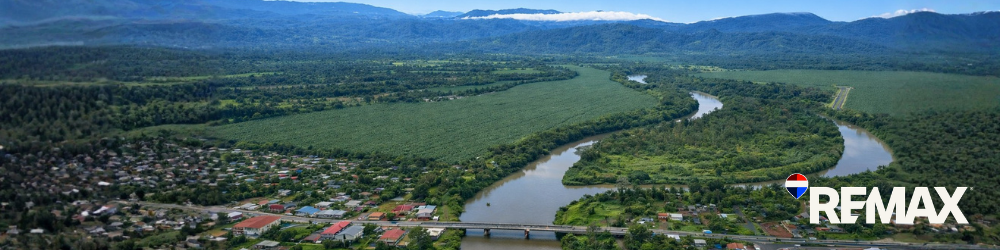
Historically, the region developed around banana exports and rail transport linked to the Caribbean coast. The bridge and surrounding infrastructure continue to support both tourism and commercial trade today.
Travelers heading to Panama’s Caribbean islands, including the famous Bocas del Toro, often pass through Sixaola on their journey.
Sixaola lies in one of Costa Rica’s most biodiverse regions, surrounded by tropical rainforest and river systems connected to the Talamanca Range. Nearby communities within Talamanca include destinations like Puerto Viejo de Talamanca, known for beaches and tourism, and several indigenous territories where Bribri and Cabécar communities maintain traditional lifestyles.
While Sixaola itself is primarily a transportation and commercial hub, the surrounding Talamanca region has growing interest among international buyers seeking Caribbean lifestyle properties.
Opportunities in the broader region may include: small eco-lodge developments, jungle homes and retreat properties, agricultural land and sustainable projects, and tourism-related investments. Because of environmental protections and indigenous territories, development tends to focus on smaller-scale projects aligned with Costa Rica’s sustainability principles.
Although not a traditional beach destination, Sixaola holds strategic importance within Costa Rica’s Caribbean region. It connects cultures, economies, and travelers between Costa Rica and Panama while serving as an access point to one of the country’s most biodiverse areas. For those exploring Costa Rica’s Caribbean provinces, Sixaola offers insight into the trade routes, cultural diversity, and geography that shape the Talamanca region.